In today’s digital world, Email Marketing is one of the most effective ways for businesses to connect with customers, promote products, and increase sales. Whether you run a small business, an online store, or a service-based company, email marketing can help you build customer relationships and grow your business.
What Is Email Marketing?
Email marketing is a digital marketing strategy that involves sending emails to people who have agreed to receive messages from a business or organization. It helps businesses share useful information, introduce products, promote services, and maintain relationships with their audiences.
Why Is Email Marketing Important for Business Growth?
Email marketing offers several benefits for beginners and small businesses.
- Cost-effective marketing: Start with a suitable free or low-cost email marketing platform.
- Direct communication: Reach subscribers through their email inboxes.
- Customer relationships: Build trust by sharing useful and relevant information.
- Increased sales opportunities: Promote products, services, and special offers.
- Measurable results: Track clicks, conversions, bounces, and other campaign metrics.
- Personalized communication: Send content based on subscribers’ interests and preferences.
Email marketing can support long-term business growth when campaigns focus on customer needs rather than sending promotional messages alone.
How to Start Email Marketing as a Beginner
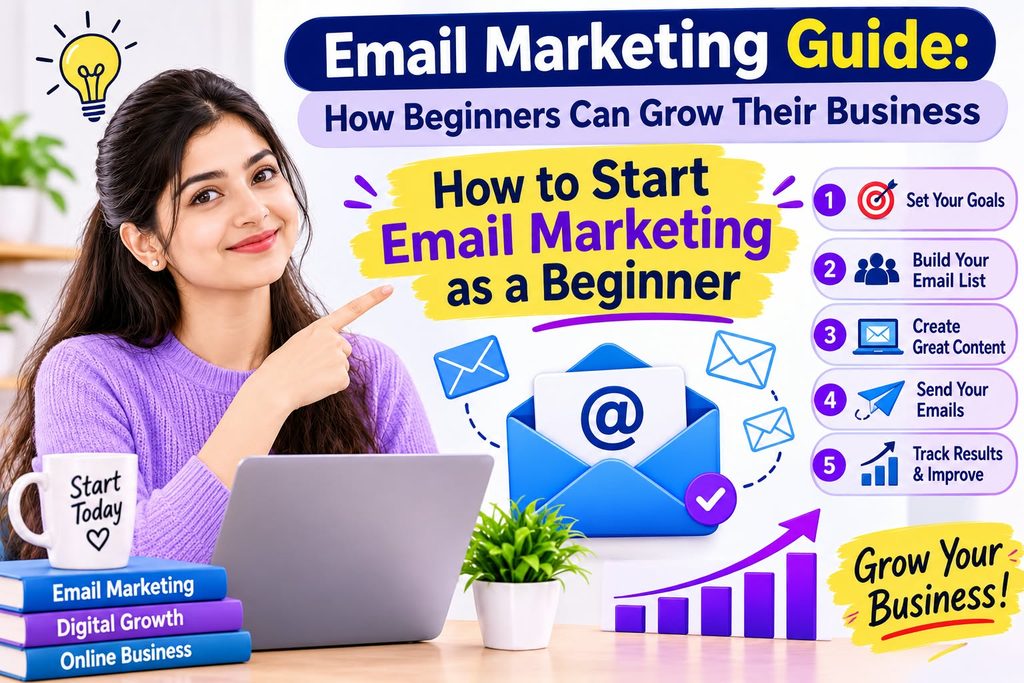
Follow these six simple steps to start email marketing for your business.
1. Define Your Marketing Goals
Before creating an email marketing campaign, decide what you want to achieve.
Your goals might include:
- Increasing website traffic.
- Generating potential customers or leads.
- Promoting products and services.
- Increasing repeat purchases.
- Building brand awareness.
Having a clear goal helps you create focused and effective email marketing campaigns.
2. Understand Your Target Audience
Understand their needs, interests, challenges, and preferences. This information will help you create relevant email marketing content that connects with your audience.
3. Build an Email List
An email list contains people who have agreed to receive your business emails.
You can build your email list using:
- Website signup forms.
- Newsletter subscriptions.
- Free guides and downloadable resources.
- Social media signup links.
- Online workshops and webinars.
Always obtain appropriate permission before sending marketing emails. Avoid purchasing email lists.
4. Choose the Right Email Marketing Tool
Email marketing tools make it easier to design, send, and track campaigns.
Popular options include:
- Mailchimp: Useful for creating email campaigns, managing subscribers, and reviewing reports.
- Brevo: Offers email marketing and customer communication features.
- Kit: Provides tools for newsletters and creator-focused email campaigns.
Compare their current features and pricing before choosing the best platform for your business.
5. Create Engaging Emails
An effective email should be attractive, easy to read, and useful to the recipient.
Include these essential elements:
- A clear and interesting subject line.
- A short, engaging introduction.
- Valuable and relevant content.
- Attractive images where appropriate.
- A clear call to action (CTA).
For example, a CTA such as “Shop the Collection” or “Read More” tells readers what to do next.
6. Track Your Results
After sending an email marketing campaign, review its performance.
Monitor clicks, conversions, delivery rates, unsubscribes, and other relevant metrics. Open rates can also be useful, although privacy features may affect their accuracy.
Use these insights to understand what works and improve future campaigns.
Best Email Marketing Strategies for Beginners
To grow your business through email marketing, follow these practical strategies:
- Segment your email list: Group subscribers by their interests or preferences to send more relevant messages.
- Personalize your emails: Make your content more useful by considering subscribers’ stated interests.
- Use email automation: Send welcome emails and other relevant messages automatically.
- Optimize for mobile: Use responsive designs, readable text, and easy-to-tap buttons.
- Provide valuable content: Share tips, tutorials, updates, and helpful information instead of only promoting products.
- Test your campaigns: Experiment with subject lines and CTA wording to identify improvements.
- Maintain consistency: Choose a sending schedule that meets your audience’s expectations.
These email marketing strategies can help improve engagement, strengthen customer relationships, and create more opportunities for business growth.
Common Email Marketing Mistakes to Avoid
Beginners can improve their results by avoiding these common mistakes:
- Sending too many promotional emails.
- Using misleading subject lines.
- Ignoring mobile-friendly design.
- Sending emails without appropriate permission.
- Forgetting to include a clear call to action.
- Ignoring campaign analytics.
- Making it difficult for subscribers to unsubscribe.
Successful email marketing depends on trust, relevant content, and continuous improvement.
Conclusion
Email marketing is a powerful digital marketing strategy that helps businesses communicate with customers, promote their products, and build lasting relationships.
As a beginner, start by defining your goals, understanding your target audience, building an email list, and choosing the right email marketing tool. Create valuable content, use clear calls to action, and measure your campaign performance regularly.
Remember, successful email marketing is not about sending more emails. It is about sending the right message to the right audience at the right time.
Start small, learn from your results, and improve your strategy consistently. With patience and the right approach, email marketing can become an important part of your business growth.
Frequently Asked Questions About Email Marketing
1. What is email marketing in simple words?
Email marketing is a digital marketing method used to send useful information, newsletters, product updates, and promotional messages to people who have agreed to receive emails from a business.
2. Is email marketing good for beginners?
Yes. Beginners can start with a simple email platform, a small subscriber list, and a clear campaign goal. They can gradually learn email design, copywriting, automation, and analytics.
3. How can email marketing help grow a small business?
Email marketing can help a small business attract leads, share product information, drive relevant website traffic, encourage repeat purchases, and build stronger customer relationships.
4. Which email marketing tool is best for beginners?
Mailchimp, Brevo, and Kit are options worth comparing. The best choice depends on your budget, audience, required features, and business goals.
5. How often should a business send marketing emails?
There is no universal schedule. A business might send a weekly newsletter or a monthly update, depending on subscriber expectations and the value it can consistently provide. Monitor engagement and unsubscribe patterns to adjust the schedule.
6. What is an email marketing campaign?
An email marketing campaign is a planned set of email communications designed to achieve a specific goal, such as promoting a product, sharing a newsletter, generating leads, or announcing a new service.
7. How do you measure email marketing performance?
Common metrics include delivery rate, bounce rate, click-through rate, conversion rate, unsubscribe rate, spam complaint rate, and ROI. The most useful metrics depend on the campaign’s objective.
8. Can email marketing increase sales?
Yes, email marketing can contribute to sales by communicating relevant offers, introducing products, nurturing leads, and encouraging repeat purchases. Results depend on the audience, offer, customer experience, and campaign execution.
9. What is email marketing automation?
Email marketing automation uses predefined rules or triggers to send messages automatically. Examples include welcome emails, educational sequences, and relevant post-purchase messages.
10. What is the most important rule for successful email marketing?
Focus on providing value to subscribers. Build your list responsibly, send relevant content, respect customer preferences, and improve your campaigns using reliable performance data.